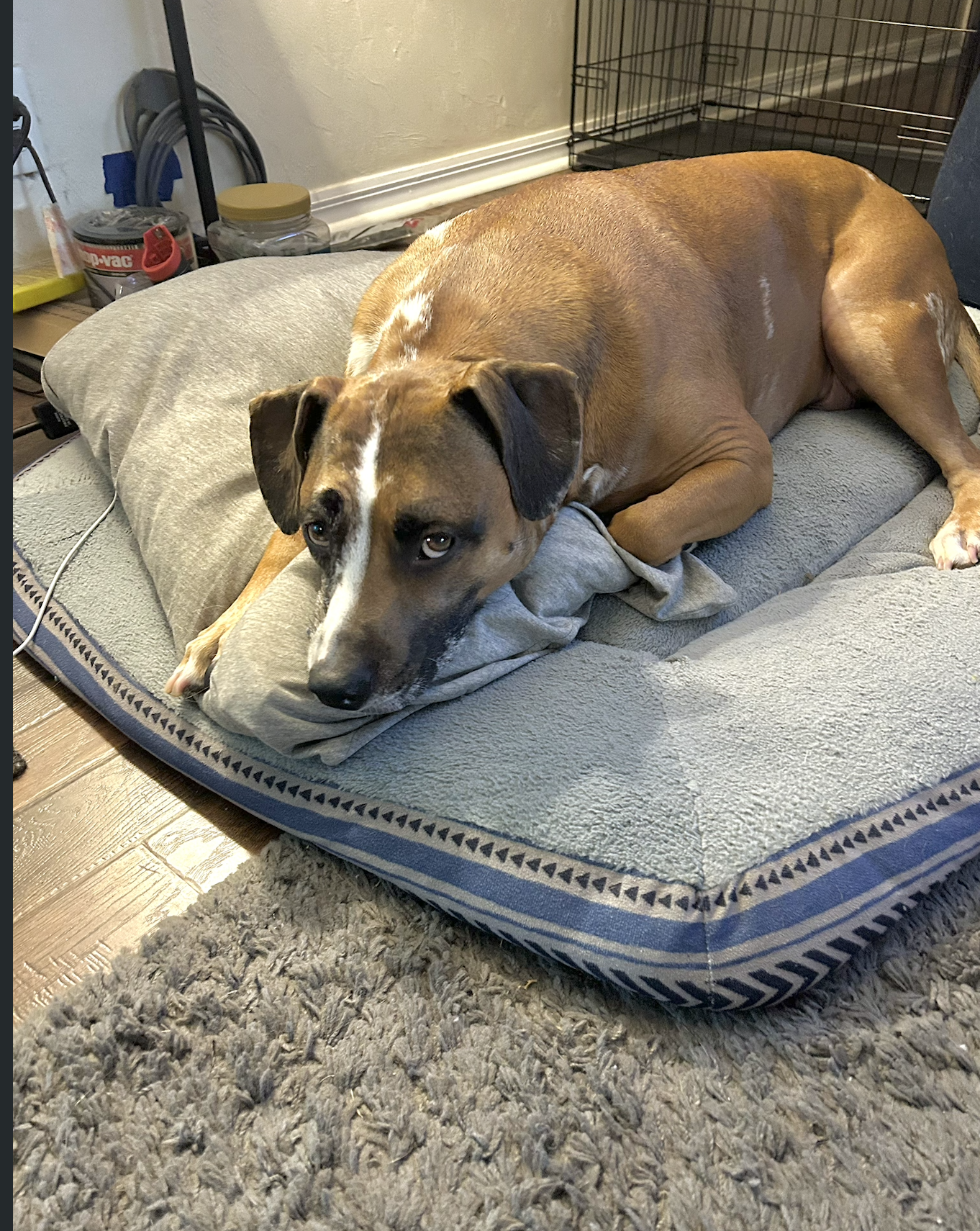
Why Do Dogs Spin Before They Lie Down? The Science Behind It
Albie does it every single time. Before he settles into his bed, he’ll circle two, three, sometimes four times — nose down, tail following — like he’s chasing something that isn’t there. Then he drops. Every time.
If your dog does the same thing, you’ve probably wondered: why? Is it a habit? An instinct? Something to do with the bed? It turns out there’s some genuinely fascinating science behind this very goofy behavior.
It’s an Ancient Instinct
The most widely accepted explanation is that pre-sleep spinning is a deeply ingrained survival behavior inherited from dogs’ wild ancestors. Before domesticated dogs had cozy memory foam beds, their predecessors slept outside in the wild — and where they slept mattered a lot.
Spinning and circling served several practical purposes in the wild:
- Flattening the ground. Wild canids would trample down grass, leaves, or brush to create a flat, even surface to sleep on — more comfortable and easier to curl up in.
- Checking for threats. Circling gave them a quick scan of the immediate area — looking and sniffing for snakes, insects, or predators hiding in the vegetation before lying down vulnerable.
- Temperature regulation. Turning in circles helped them assess which direction offered the most warmth from the sun or the most shelter from wind, and then orient their body accordingly.
- Scent marking. Dogs have scent glands in their paws. Circling the area before lying down left their scent, essentially claiming the sleep spot as theirs.
Modern dogs don’t need to do any of this. But the wiring is still there. Evolution doesn’t update on our timeline.
It’s Also Just Comfortable
Beyond instinct, there’s a simpler explanation: spinning helps dogs get comfortable. Circling before lying down lets them test the surface, adjust their position, and find the exact spot that feels right before committing.
Think of it like how humans fluff a pillow before bed, or shift around a few times before finding the right position. Dogs just express that same instinct a little more dramatically.
Why Does It Vary From Dog to Dog?
You may have noticed that some dogs spin obsessively before every nap, while others barely do it at all. This comes down to a mix of factors:
- Breed tendencies. Herding breeds and dogs with strong working instincts tend to be more ritualistic in their behaviors generally. But really, any dog can be a spinner.
- Individual habit. Some dogs simply developed the spinning habit as a puppy and it stuck. Others skipped it entirely. There’s a wide range of normal.
- The sleep surface. Dogs are more likely to spin on soft, uneven surfaces (like blankets or fluffy beds) than on flat, firm ones. On a hard floor, there’s not much point in circling to flatten things out.
The Research Behind It
Researchers at Budapest’s Family Dog Project studied this behavior and found that dogs were significantly more likely to spin before lying down on an uneven surface than on a flat one — supporting the theory that the behavior is functionally linked to nesting and surface preparation, not just random habit.
Interestingly, the study also found no significant difference between breeds in terms of how often they circled — suggesting it’s a species-wide behavior rather than something specific to certain types of dogs.
When Should You Be Concerned?
Pre-sleep spinning is completely normal. But there are a few situations where spinning behavior warrants a closer look:
- Compulsive spinning at other times. If your dog spins not just before lying down but randomly throughout the day, and can’t seem to stop, this could be a sign of a compulsive disorder or neurological issue. Worth a vet visit.
- Spinning combined with apparent pain or difficulty lying down. If your dog spins multiple times but then seems to struggle or hesitate before actually lying down, they may be experiencing joint discomfort — especially in older dogs. This is worth mentioning to your vet.
- A sudden change in the behavior. If a dog that never spun suddenly starts doing it excessively, or a dog that always spun abruptly stops and seems uncomfortable, a checkup makes sense.
The Bottom Line
Your dog isn’t broken — they’re just following a script written thousands of years ago. Every time Albie does his little pre-bed spin cycle, he’s essentially channeling his inner wild ancestor who needed to check the perimeter before settling in for the night.
It’s one of those small dog behaviors that looks silly on a plush dog bed in a warm house — but makes complete sense when you understand where it comes from. The instinct survived. The tall grass did not. 🐾